
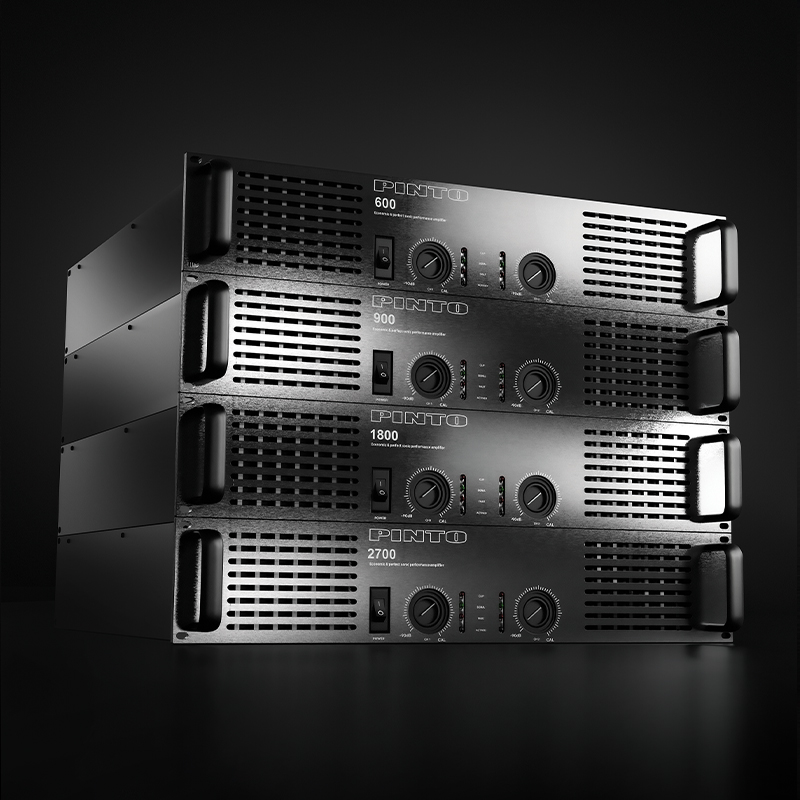
A venue with a main room, foyer, bar and outdoor area does not have one sound system. It has several listening environments that happen to share sources and infrastructure. Power planning must reflect those differences, because each zone has its own coverage, volume and operating pattern.
The main room may need dynamic music at performance level. A foyer might carry announcements and low-level background audio. The bar can be noisy yet require even coverage rather than high impact, while an outdoor zone may face strict operating hours. Treating every area as identical leads to poor control and wasted capacity.
Planning begins with a zone schedule. For each area, record the loudspeaker type, number of channels, expected content, typical level and hours of use. This creates a practical map for selecting professional power amplifiers and deciding whether zones should share hardware or remain independent.
Loudspeaker and amplifier compatibility must be confirmed from reliable technical information. The designer needs to consider the system topology, load, channel arrangement and any transformer-based distribution used for installed audio. Because incorrect design can damage equipment or create safety concerns, complex systems should be specified and installed by appropriately qualified professionals.
Separate level control is essential. Staff may need lively music in one room and quiet speech in another. Zone processors, matrix routing or approved amplifier controls can provide that flexibility. The interface should remain simple enough for ordinary venue staff to use without changing protected settings.
Power demand is not just an audio calculation. Racks, processors, network devices and cooling all rely on the electrical installation. Circuits, isolation and power distribution should be assessed by competent people in line with the site’s requirements. Audio staff should not improvise mains connections to solve a capacity problem.
Redundancy depends on the venue’s priorities. A small background zone may tolerate temporary silence, while an evacuation interface or major event room may require a different resilience plan. Spare channels can help, but only when routing, loads and procedures have been considered in advance.
Rack location affects reliability. Professional
power amplifiers produce heat and need ventilation. A
cupboard chosen for convenience may become unsuitable once doors close and
other equipment is added. The rack also needs secure access, cable management
and enough working space for maintenance.
Cable routes should follow the zone plan. Clear labels at both ends reduce troubleshooting time, especially when several similar speaker lines return to one rack. Documentation should show channel assignments, processor outputs and any approved spare connections. Changes made during an event should be recorded rather than left as a mystery for the next technician.
Commissioning tests each zone as part of the whole venue. Engineers can confirm polarity, coverage, level control, limiting and source routing, then check what happens when several zones run at once. Staff should also practise common tasks such as muting an outdoor area, lowering the foyer or switching the bar source.
Operational rules keep the design intact. Protected settings should remain locked, ventilation paths must stay clear and extra speakers should not be connected without review. A short fault guide can tell staff which symptoms require a technician and which controls they may safely check.
Future changes should be allowed for without oversizing every channel. A documented spare path, available rack space and identified cable route may be more useful than unused power bought without a plan. The venue can review likely extensions, such as a private room or seasonal outdoor area, and decide what infrastructure is sensible now. This keeps expansion of professional power amplifiers possible while avoiding a confusing system built around guesses.
Good multi-zone planning balances independence
with simplicity. Each area receives the power and control it needs, while the
venue avoids unnecessary complexity. When professional power amplifiers are
selected within a documented system, staff can run several spaces confidently
without forcing one room’s requirements onto every other zone.
Post a Comment